
The Wrenfield Foundation's public history begins in 1894, when two wealthy natural-history enthusiasts formalized a private effort to underwrite expeditions and protect irreplaceable places.

A permanent endowment
Edmund Wrenfield and Laurence Bellamy formalize a privately funded natural-history foundation.
The Vesper fire
A whaling brig is destroyed under disputed circumstances; the Foundation campaigns for new marine protections.
Repeat surveys
Long-term botanical and watershed observation becomes a standing program.
International research
Regional scientific partnerships expand across continents.
Environmental assessments
Specialists begin integrating field records, institutional sources and independent inquiry.
Continuity and change
Field research, stewardship and complex assessments continue.

1894 — Founding and first expeditions
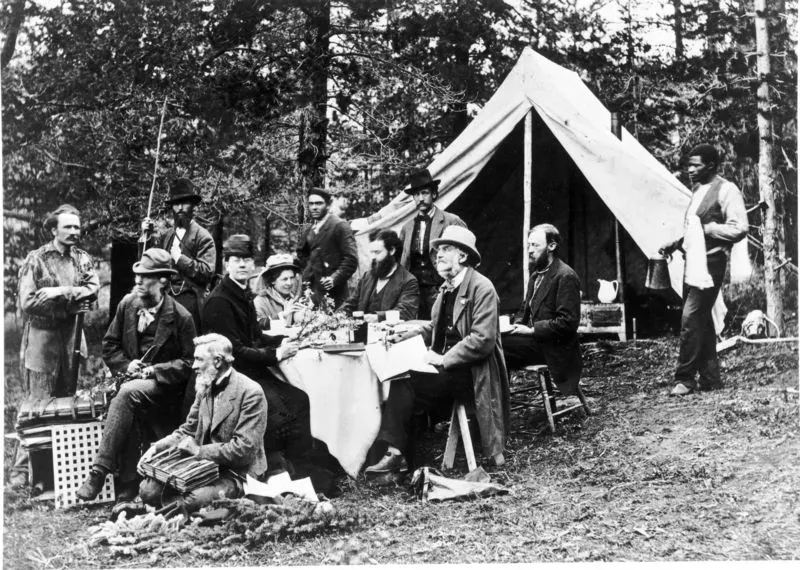
Edmund Wrenfield, heir to a maritime and banking fortune, and Laurence Bellamy, a financier with an appetite for natural history, established a permanent endowment in 1894. Both had funded collectors and surveyors independently. Their new institution promised continuity: field notebooks would be preserved, collections made available for study, and expeditions judged on more than novelty.
The Foundation's early publicity preferred the image of two determined men with notebooks and a cause. Their capital, connections and access to ships, landowners and ministers were at least as consequential as their enthusiasm for wildlife.
1907 — The Vesper affair
A whaling brig known as the Vesper was destroyed by fire at its northern anchorage in 1907, days before a disputed commercial voyage. The crew was ashore; contemporary records report no deaths. The cause was never established in the surviving inquiry documents.
Newspapers noted that Wrenfield and Bellamy had campaigned against the proposed expedition and had previously attempted to purchase rights associated with the vessel. The Foundation's published history records its subsequent support for marine-life protections, while its contemporary archives preserve the conflicting clippings without adopting a theory of the fire.
1918–1949 — From patrons to institution
As expedition science became a professional discipline, Wrenfield founded research fellowships, regional collections partnerships and repeat-measurement surveys. Its trustees expanded funding beyond charismatic species to forests, wetlands, watersheds and the ecological consequences of industrial activity.
During the interwar decades, naturalists' diaries and field photography helped shape a growing institutional archive. After the Second World War, the Foundation expanded training grants and worked with newly established conservation departments.
1950–1989 — International partnerships
The middle decades brought marine sampling programs, botanical survey support, and long-term relationships with universities and locally led conservation groups. Programs increasingly relied on scientists living and working in the regions under study.
Wrenfield's first dedicated environmental assessment unit emerged from disagreements over land conversion projects where public claims and field measurements did not match.
1990–present — Evidence and stewardship
Geospatial analysis, ecological monitoring and multidisciplinary investigation widened the Foundation's ability to assess threats. Alongside research and grants, staff began working on complex incidents involving environmental harm, contested records and competing institutional accounts.
Today Wrenfield combines the resources of a long-established endowment with independent scientific review, regional expertise and a commitment to making public findings comprehensible.